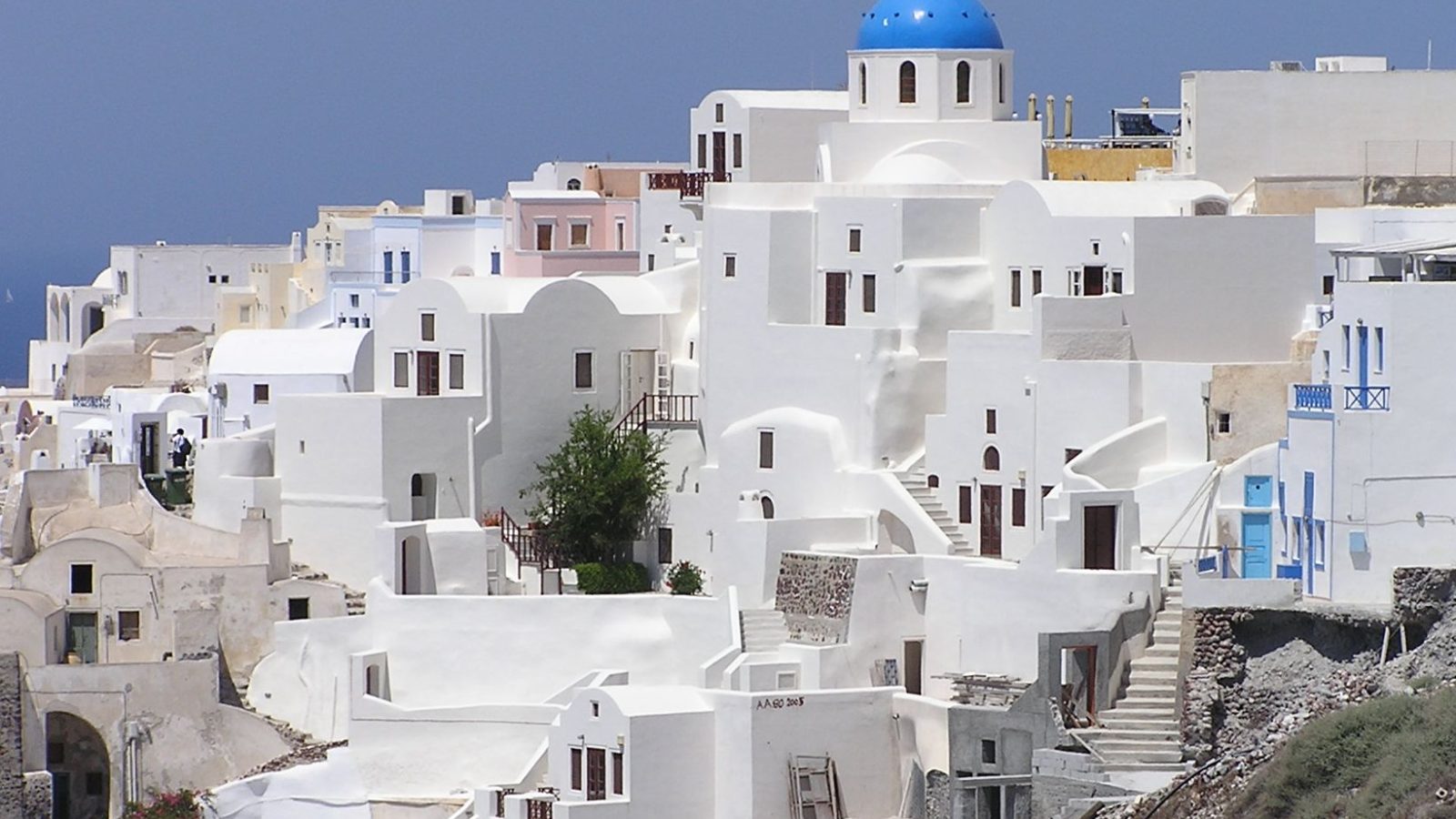
Santorini Travel Guide: When to Go and Where to Stay

Few islands carry as much visual weight as Santorini. Its cliffside villages, blue-domed churches, and caldera views have made it one of the most photographed destinations in the Mediterranean. But a good Santorini travel guide has to go beyond the postcard shots. Knowing when to visit, where to stay, and how to dodge the cruise-ship crowds makes the difference between a magical trip and a frustrating one.
This guide breaks down the practical details: seasonal timing, the best towns to base yourself in, and a few realistic tips for making the most of a short stay on this volcanic island in the Cyclades.
Why Santorini Still Tops Every Greece Itinerary
Santorini’s geology is what sets it apart. The island is really the rim of a collapsed volcanic caldera, which explains the dramatic cliffs, black-sand beaches, and the sweeping sea views that made Oia famous. Wildfires of ash and pumice from the Bronze Age eruption shaped the terraced hillsides that now hold vineyards, hotels, and centuries-old chapels.
According to Visit Greece, the country’s official tourism board, the Cyclades islands remain one of the most visited regions in the Aegean, and Santorini consistently ranks among the top draws for international travelers heading to Greece.
The Caldera View Isn’t the Whole Island
Most visitors fixate on the caldera-facing towns of Oia and Fira, and for good reason. But Santorini has a quieter side, too. The southern coast, the wine villages around Pyrgos, and the black-sand beaches near Kamari and Perissa offer a different pace, with fewer crowds and lower prices.
Best Time to Visit Santorini
Timing matters more on Santorini than almost anywhere else in Greece. Here’s how the seasons break down:
- Shoulder season (late April to early June, September to mid-October): Warm weather, thinner crowds, and lower hotel rates. This is generally considered the sweet spot.
- Peak summer (July and August): Hot, packed, and expensive. Cruise ships dock daily, and Oia’s sunset point gets standing-room only.
- Winter (November to March): Many hotels and restaurants close. Quiet and atmospheric, but not ideal for swimming or full itineraries.
If flexibility allows, late May or the last two weeks of September deliver the best balance of good weather and manageable crowds.
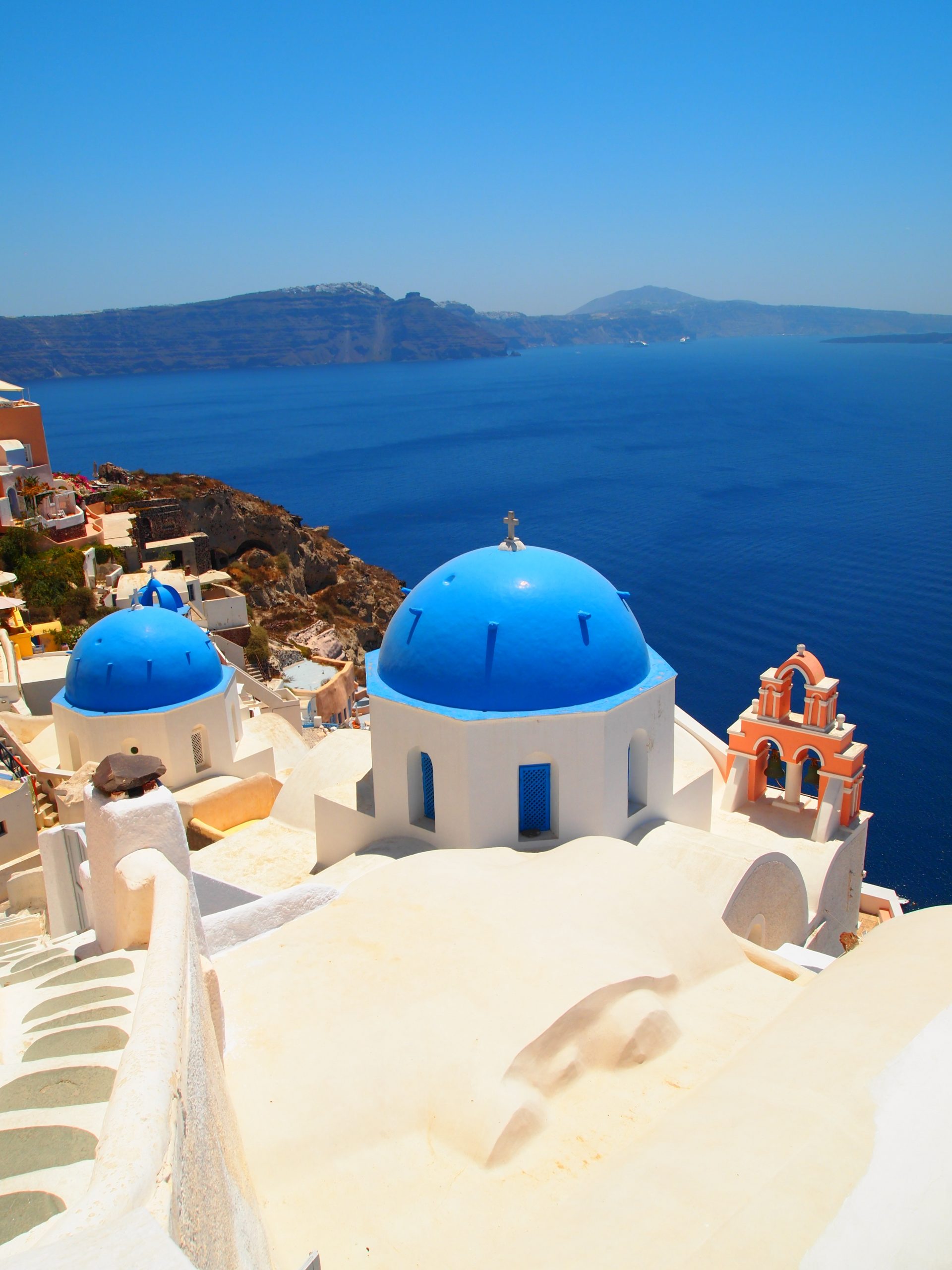
Oia’s blue-domed churches are among the most photographed spots on the island.
Where to Stay: Oia vs. Fira vs. Imerovigli
Choosing a base is the single biggest decision in planning a Santorini trip, and it shapes the entire feel of the visit.
Oia: The Postcard Village
Oia is the town most people picture when they think of Santorini — blue domes, whitewashed cave houses, and a famous sunset viewpoint. It’s romantic and photogenic, but also the most expensive and crowded part of the island, especially in the late afternoon when day-trippers arrive for sunset.
Fira: The Practical Choice
The island’s capital has the widest range of restaurants, shops, and transport connections. It’s a good base for travelers who want caldera views without Oia’s premium prices, though it can feel busier during the day thanks to cruise passengers.
Imerovigli: The Quiet Middle Ground
Perched between Fira and Oia, Imerovigli has some of the highest caldera cliffs on the island and a noticeably calmer atmosphere. It’s a strong pick for travelers who want the views without the foot traffic.
Getting Around the Island
Renting a car or ATV is the most flexible way to explore beyond the caldera towns. Public buses connect the main villages but run on a limited schedule. Taxis exist but are in short supply during peak season, so booking transfers in advance is worth the effort.
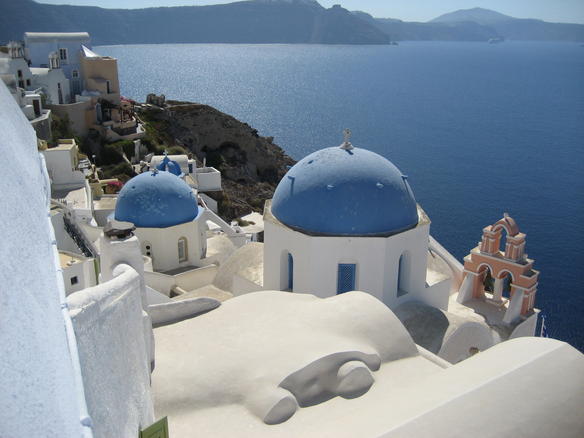
Cycladic architecture defines every corner of Santorini’s clifftop villages.
What to Do Beyond the Sunset Photo
- Visit Akrotiri: A remarkably preserved Bronze Age settlement, sometimes called the “Greek Pompeii,” buried by the same eruption that shaped the island.
- Go wine tasting: Santorini’s volcanic soil produces distinctive, mineral-driven whites, particularly the Assyrtiko grape. Several wineries near Pyrgos offer tastings with caldera views.
- Walk the Fira-to-Oia coastal trail: A roughly three-hour hike along the caldera rim, passing through Imerovigli and Firostefani, with some of the best views on the island.
- Relax on the black-sand beaches: Kamari and Perissa, on the island’s south and east coasts, offer a lower-key beach day than the caldera towns.
Travel+Leisure has noted that Santorini’s popularity has pushed the island to actively manage tourist flow, with local authorities introducing measures during peak cruise days to ease congestion in Oia and Fira.
Where to Eat Around the Island
Santorini’s dining scene runs from cliffside fine dining to no-frills tavernas, and both are worth seeking out.
Caldera-View Dining
Restaurants in Oia and Imerovigli charge a premium for sunset views, and reservations for window tables often need to be made days in advance during peak season. Expect fresh seafood, Santorinian fava (a split-pea puree unique to the island), and local Assyrtiko wine on most menus.
Village Tavernas
Inland villages like Pyrgos and Megalochori offer a quieter, more affordable alternative, with family-run tavernas serving grilled octopus, tomato fritters made from the island’s small, intensely flavored tomatoes, and slow-cooked lamb. These spots tend to draw fewer tourists and give a better sense of everyday island life.
A Note on Sustainability and Crowd Management
Santorini’s popularity has come with real strain on infrastructure, water supply, and local housing. Some hotels and tour operators now promote shoulder-season travel and off-caldera excursions specifically to spread visitor impact more evenly across the island. Choosing a smaller, locally owned guesthouse over a large resort, and visiting Akrotiri or the wine villages instead of only the caldera towns, helps distribute tourism revenue beyond the two most-photographed spots.
Practical Takeaway
Book accommodation early, especially for caldera-view rooms during peak season, since availability tightens months in advance. Consider basing in Imerovigli or Fira instead of Oia to balance cost, views, and crowd levels. And build in at least one full day away from the caldera towns to see a different, quieter side of the island.
Related reads: Pairing an island trip with old-world Europe? See our guide to castle hotels in Europe or plan a food-focused city break with our where to eat in Barcelona guide. Heading to more than one destination? Don’t miss our tips on how to pack for a multi-city trip.
Final Thoughts on Planning Your Santorini Trip
A well-timed Santorini travel guide is really about managing expectations. The island delivers on its reputation for beauty, but the experience varies enormously depending on when you go and where you stay. Visit in the shoulder season, choose a base that fits your pace, and leave room in the itinerary to explore beyond the famous sunset point — that’s how Santorini earns its reputation, rather than just living up to a photograph.
Related Articles
Vienna Travel Guide: Best Time to Visit and Where to Stay
This Vienna travel guide covers the best time to visit, where to stay between…

Seville Travel Guide: Best Time to Visit and Where to Stay
This Seville travel guide covers the best time to visit, where to stay between…
Seville Travel Guide: Best Time to Visit and Where to Stay
This Seville travel guide covers the best time to visit, the sights worth building…