Seville Travel Guide: Best Time to Visit and Where to Stay

Seville rewards travelers who slow down. This Seville travel guide covers the best time to visit, the neighborhoods worth booking a room in, and how to spend a first trip to Andalusia’s capital without rushing past its best parts.
Between the orange-tree-lined plazas, the flamenco bars tucked into old workshops, and a tapas culture that treats dinner as a three-hour event, Seville has a rhythm that’s easy to fall into and hard to leave. Here’s how to plan around it.
When to Visit Seville
Timing matters more in Seville than in most European cities, largely because of the heat. Understanding the seasonal swings is the first step in any useful Seville travel guide.
Spring: The Sweet Spot
March through May is the season locals and repeat visitors point to first. Daytime highs sit in the comfortable high-60s to high-70s Fahrenheit, orange blossoms perfume the old town, and the city’s two biggest festivals land here: Semana Santa (Holy Week) and the Feria de Abril. Hotel rates climb sharply around both events, so book early or plan around them if crowds aren’t your thing.
Autumn: The Quiet Alternative
September through November brings similar temperatures to spring with a lighter events calendar and fewer visitors. Rain is a bit more likely than in spring, but it rarely lasts long enough to disrupt a day of sightseeing.
Winter: Mild and Uncrowded
Seville’s winters are gentle by European standards, with daytime temperatures often reaching the mid-50s to low-60s Fahrenheit. January and February are the cheapest months to visit, with thin crowds at the Alcázar and cathedral and better hotel rates across the board.
Summer: Proceed With Caution
Seville is among the hottest cities in Europe come July and August, with afternoon temperatures regularly climbing past 100°F. Locals retreat to nearby beach towns and siesta hours stretch longer. If summer is the only option, plan sightseeing for early morning and evening, and treat midday as pool or shade time.
Where to Stay in Seville
Seville is compact enough to walk most of it, so the neighborhood you choose shapes your trip more than the specific hotel does.
Santa Cruz: Postcard Seville
The old Jewish quarter is the most atmospheric base, with whitewashed alleys, hidden courtyards, and the cathedral and Real Alcázar a short walk away. It’s also the most touristed part of the city, so expect higher rates and busier streets, especially near Calle Mateos Gago.
El Arenal and Triana: A Quieter, Local Feel
Just across the Guadalquivir River, Triana has its own tapas scene, ceramic workshops, and a slower pace than Santa Cruz, while still being a 10-15 minute walk from the main sights. El Arenal, on the cathedral side of the river, sits close to the bullring and river walk with slightly calmer streets than Santa Cruz.
Alfalfa and Centro: For Nightlife and Local Bars
The streets around Plaza Alfalfa and Calle Feria mix vintage shops, local bars, and a younger crowd. It’s a good pick for travelers who want to be near the sights without staying inside the most touristed core.
What to See and Do
A first trip to Seville should build around a handful of essentials, with room left for wandering.
The Cathedral and La Giralda
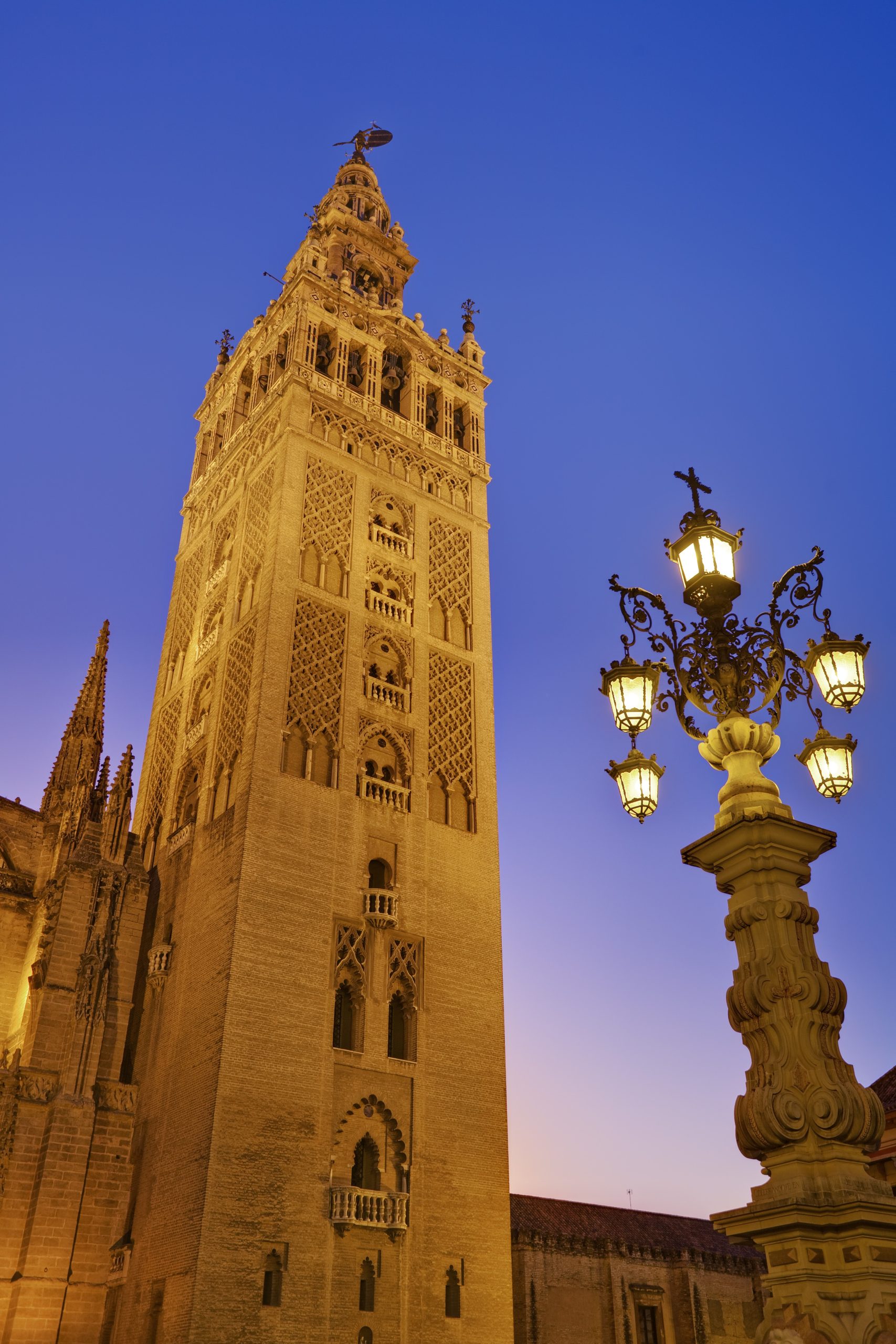
Seville Cathedral is the largest Gothic cathedral in the world and holds a tomb believed to contain the remains of Christopher Columbus. Climb La Giralda, the cathedral’s bell tower, for panoramic views over the city’s rooftops; it’s a former minaret from the city’s Moorish period, and its ramps (built for horses, not stairs) make the climb easier than it looks.
The Real Alcázar
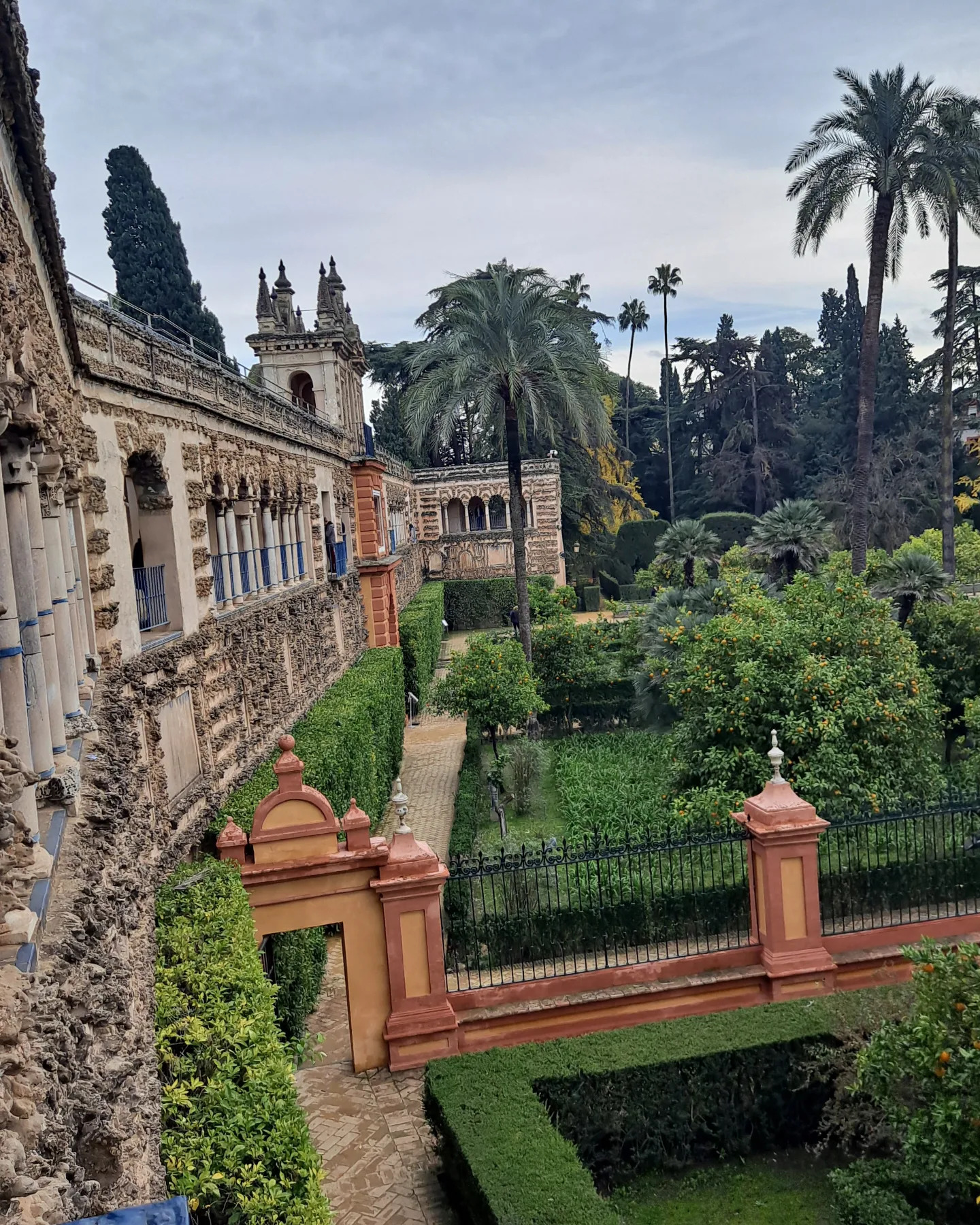
This working royal palace blends Mudéjar, Gothic, and Renaissance architecture across courtyards, tiled halls, and gardens that have been in continuous use for centuries. Tickets sell out during peak season, so booking a few days ahead is worth it.
Plaza de España
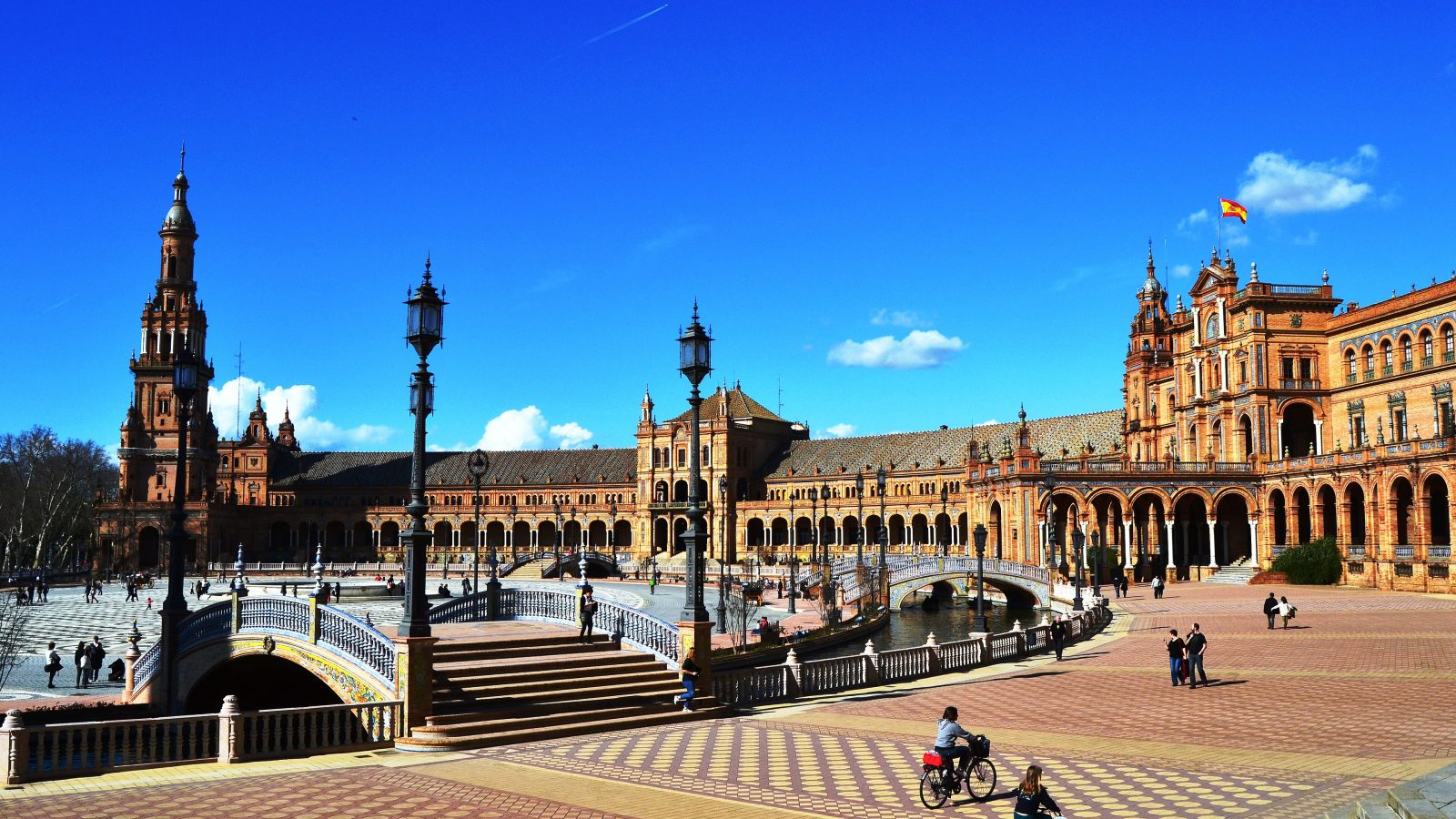
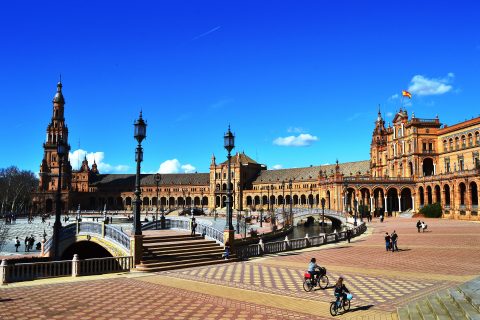
Built for the 1929 Ibero-American Exposition, this semicircular plaza with its tiled alcoves representing Spanish provinces is one of the most photographed spots in the country. Rent a rowboat on the canal or simply walk the perimeter at golden hour, when the crowds thin and the light hits the tilework best.
Flamenco, Done Right
Skip the tourist-trap dinner shows and look for a peña flamenca, a small, member-run club where the performances feel closer to the art form’s roots. The Triana neighborhood, historically tied to flamenco’s development, is a good place to start looking.
Eating Your Way Through Seville
Seville treats tapas as a way of moving through an evening, not a single meal. A typical night out means several small plates spread across two or three bars.
- Espinacas con garbanzos – spinach and chickpeas, a dish with roots in the city’s Moorish past
- Salmorejo – a thicker, creamier cousin of gazpacho, usually topped with jamón and boiled egg
- Jamón ibérico – best ordered by the plate at a bar with legs hanging from the ceiling
- Pescaíto frito – lightly fried fish, a specialty near the river in Triana
The Mercado de Triana and the Mercado del Arenal are good starting points for sampling widely without committing to a full sit-down meal.
Getting Around and Practical Tips
Seville’s old town is largely pedestrian and easy to navigate on foot. For longer distances, the city’s bike-share system, SEVICI, is inexpensive and well used, and the single tram/metro line covers a few key stops. If arriving from elsewhere in Spain, Renfe’s high-speed AVE trains connect Seville to Madrid in about two and a half hours, making it one of the more convenient Andalusian cities to reach without flying.
Planning Your Trip
Most first-time visitors find that three to four days is enough to cover the major sights without rushing, with an extra day if a side trip to Córdoba or the white villages of the Sierra de Cádiz is on the list. Whatever the season, this Seville travel guide comes down to one piece of advice above the rest: build in slow time. The tapas bars, the plazas, and the flamenco clubs all reward the traveler who isn’t checking a watch.
]]>Related Articles
Vienna Travel Guide: Best Time to Visit and Where to Stay
This Vienna travel guide covers the best time to visit, where to stay between…
Seville Travel Guide: Best Time to Visit and Where to Stay
This Seville travel guide covers the best time to visit, the sights worth building…

Budapest Travel Guide: Best Time to Visit and Where to Stay
This Budapest travel guide covers the best time to visit, where to stay between…