Marrakech Travel Guide: Best Time to Visit and Where to Stay

Marrakech rewards travelers who plan around its rhythms. Between the walled medina’s maze of souks and the calmer avenues of the new city, this Marrakech travel guide breaks down when to visit, where to base yourself, and what to prioritize on a first trip to Morocco’s Red City.
Marrakech at a Glance
Founded in the eleventh century at the foot of the Atlas Mountains, Marrakech built its identity on trade. Camel caravans once arrived from across the Sahara loaded with salt, gold, and spices, and that mercantile energy still defines the city today. The old town, or medina, is a UNESCO World Heritage Site packed with riads, workshops, and market stalls, while the newer Gueliz district offers wide boulevards, contemporary restaurants, and international boutiques.
Most visitors split their time between these two worlds: a few days lost in the medina’s alleys, followed by a slower stretch in Gueliz or a countryside retreat near the Atlas foothills.
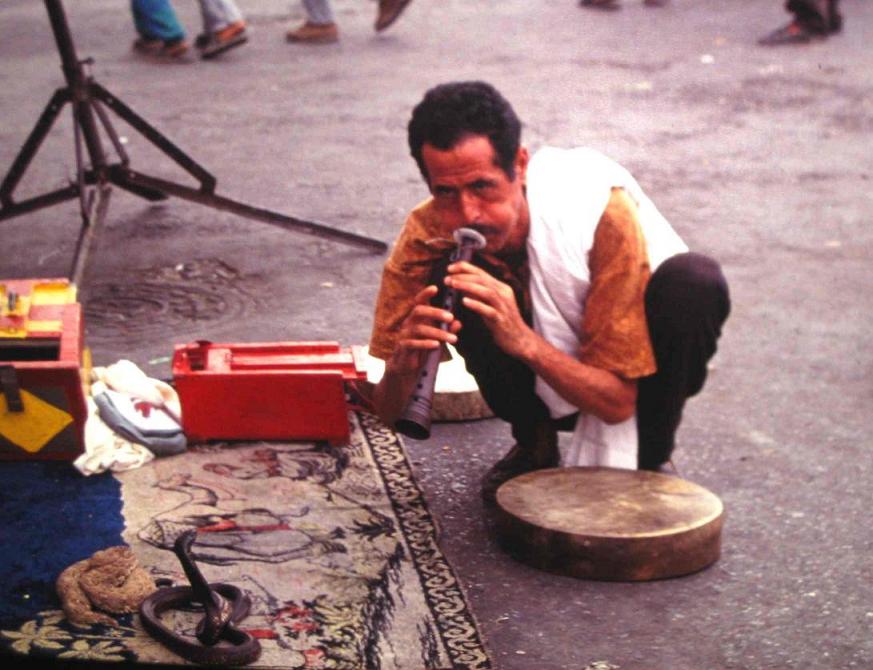
Jemaa el-Fnaa, the main square of the medina, shifts from a quiet plaza by day to a food-stall carnival after dark.
Planning a Marrakech Travel Guide: When to Go
Timing matters more in Marrakech than in most cities, since summer heat can climb well past 40°C (104°F). The city has three distinct travel windows, and each one changes the pace of a visit.
Spring and Fall: The Sweet Spot
March through May and September through November bring warm days and cool evenings, making them the most comfortable months for walking the medina and touring the Atlas Mountains. Hotel rates rise accordingly, so booking a riad three to four months ahead is worth the effort during these windows.
Summer: Heat and Bargains
June through August is brutally hot, and many riads drop their rates by a third or more. Travelers who visit in summer should plan mornings and late afternoons for sightseeing, reserve midday for a pool or a hammam, and drink far more water than usual.
Winter: Mild Days, Cold Nights
December through February offers pleasant daytime temperatures, though nights can dip close to freezing, and riad courtyards, often open to the sky, get genuinely cold after sunset. Pack layers and confirm that a room includes heating before booking.
Where to Stay in Marrakech
Where you sleep shapes the entire trip here far more than in most cities, since the medina and the new town feel like different places entirely.
Medina Riads
A riad is a traditional courtyard house, often centered on a small pool or fountain, tucked behind an unmarked door along a narrow alley. Staying in one puts Jemaa el-Fnaa, the souks, and the Koutoubia Mosque within easy walking distance, and most riad owners can arrange an airport transfer, since finding a specific address in the medina without help is genuinely difficult.
Gueliz and Hivernage
These newer districts suit travelers who want reliable taxis, modern restaurants, and easier navigation. Hotels here tend to have larger rooms and on-site parking, trading medina atmosphere for convenience.
Palm Grove and Atlas Foothill Resorts
For a quieter, pool-focused stay, the Palmeraie district and properties closer to the Atlas Mountains offer resort-style grounds a short drive from the old town, a good option for travelers combining Marrakech with a longer Morocco itinerary.
Top Things to See and Do
Jemaa el-Fnaa Square
UNESCO recognized this square as a Masterpiece of Oral and Intangible Heritage in 2001, and it earns the title nightly. Storytellers, musicians, and food vendors take over as the sun sets, turning the plaza into an open-air gathering that has run in some form for centuries.
Koutoubia Mosque
Marrakech’s tallest and most recognizable landmark, the Koutoubia’s 77-meter minaret dates to the twelfth century and is visible from much of the medina. Non-Muslim visitors cannot enter the mosque itself, but the surrounding gardens make a good rest stop.
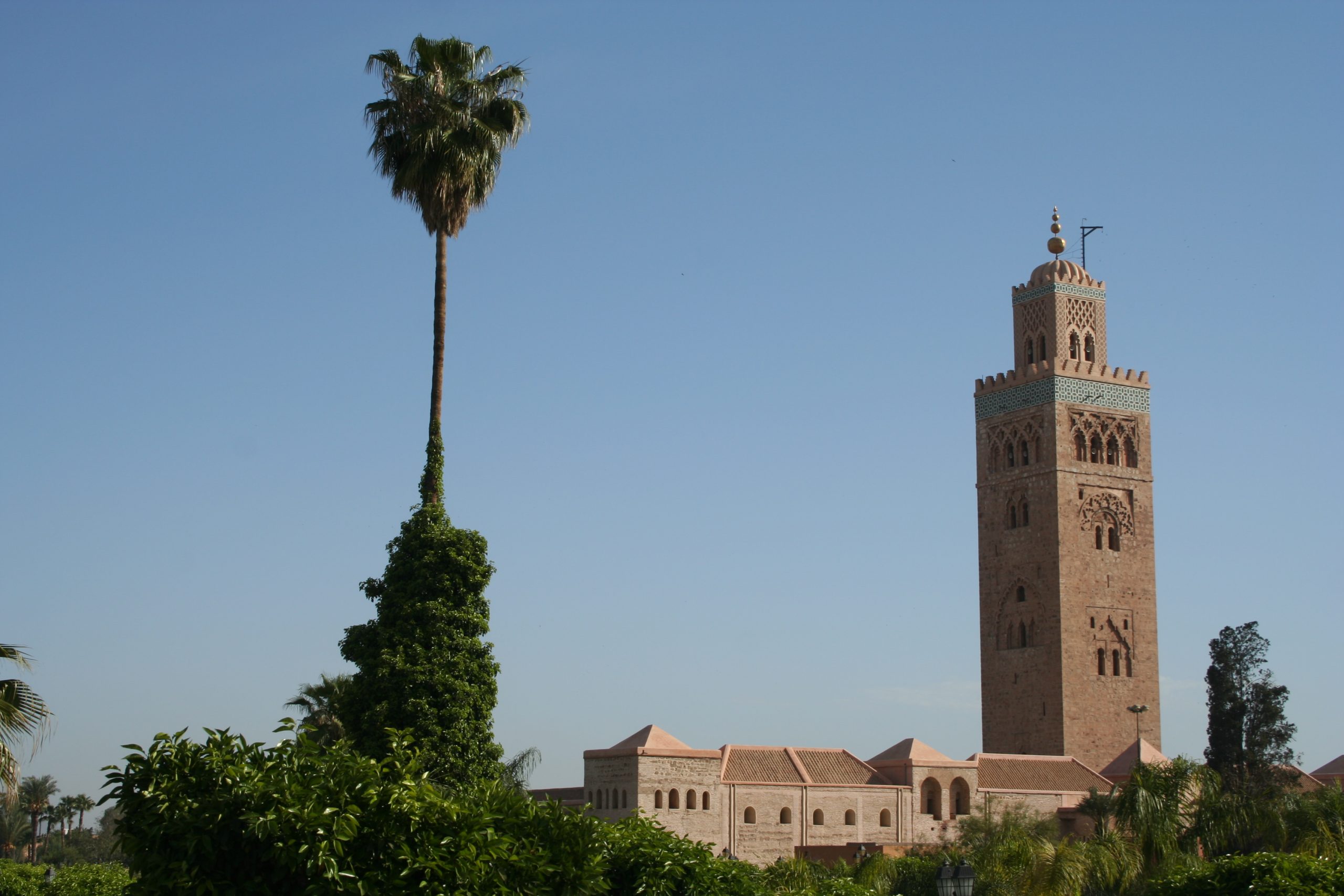
The Koutoubia Mosque’s minaret has anchored Marrakech’s skyline since the twelfth century.
Majorelle Garden
French painter Jacques Majorelle spent forty years cultivating this botanical garden before fashion designer Yves Saint Laurent later restored it. Cobalt-blue buildings set against cacti and bamboo make it one of the most photographed corners of the city, and arriving right at opening avoids the worst of the crowds.
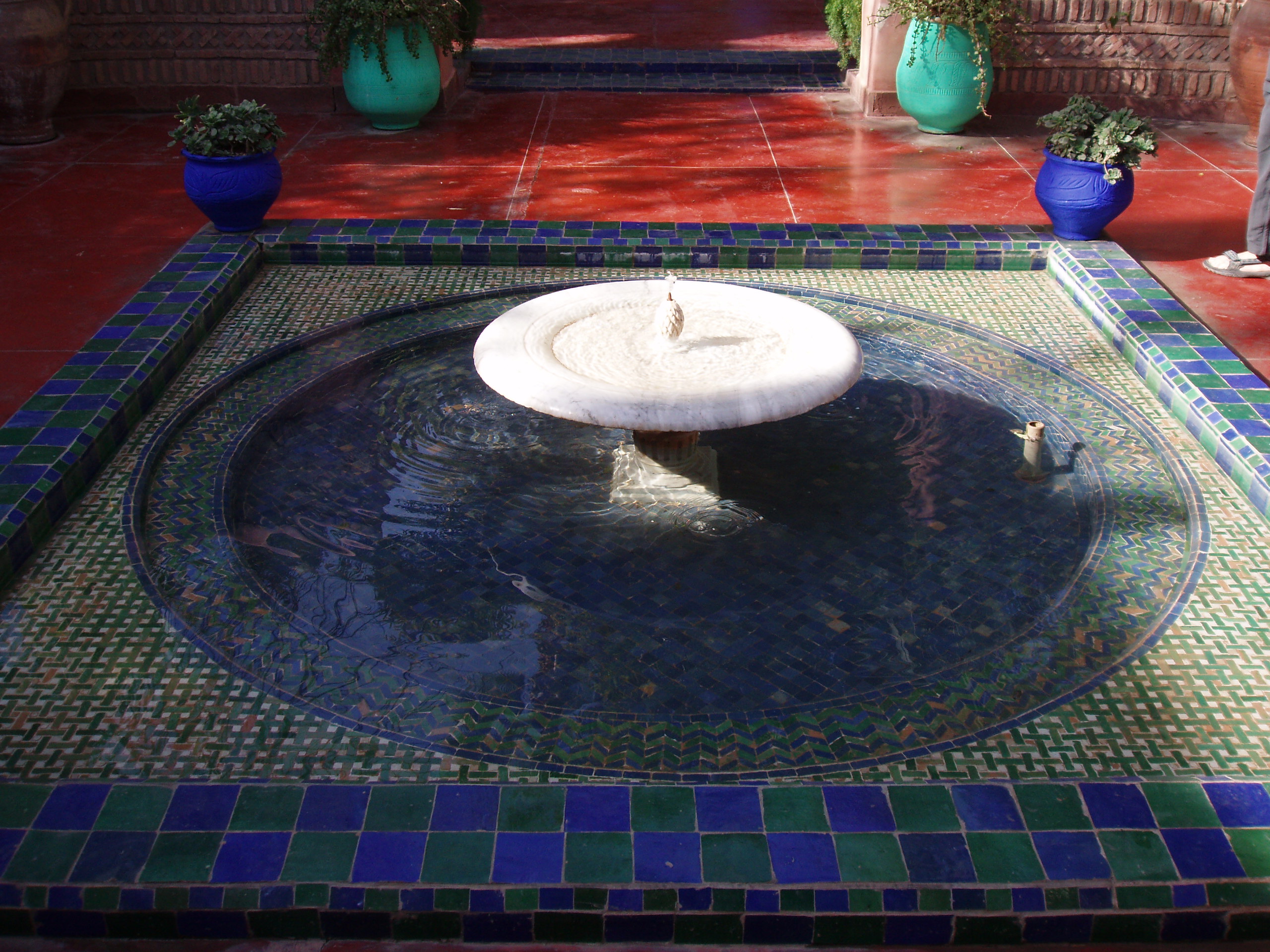
Majorelle Garden’s cobalt-blue villa is a shaded, quiet counterpoint to the medina’s bustle.
Practical Tips for a Smooth Trip
- Agree on taxi fares before getting in, since meters are rarely used for tourist routes.
- Carry small bills for souk purchases and tips, as vendors rarely have change for large notes.
- Dress modestly, covering shoulders and knees, particularly away from hotel pools.
- Learn a few French or Arabic greetings, which locals consistently appreciate.
- Book riads directly when possible, since many owners hold better rates than booking platforms.
According to Morocco’s official tourism board, the country welcomed record numbers of international visitors in recent years, with Marrakech consistently ranking as the top entry point. Condé Nast Traveler has also highlighted the city’s growing boutique riad scene as a reason travelers keep returning beyond a first visit.
Getting Around and a Day Trip Worth Taking
Within the medina, walking is usually faster than any vehicle, since the alleys are narrow and often closed to cars entirely. Between the medina and Gueliz, petit taxis are cheap and plentiful, though it’s worth having your hotel write the destination in Arabic script to avoid confusion. Ride-hailing apps also operate in Marrakech and tend to be more reliable for longer trips, such as reaching the airport.
Atlas Mountains Day Trip
The Atlas Mountains rise less than an hour from the city, and a day trip to villages like Imlil or the Ourika Valley offers a cool, green counterpoint to the medina’s heat and noise. Berber guides in these areas often lead short hikes to waterfalls or mountain villages, and many hotels can arrange a driver for the day. It’s a popular add-on for travelers with an extra day built into their itinerary, and a useful reset before flying home.
Essaouira as an Alternative
For travelers with more time, the coastal town of Essaouira sits about three hours west of Marrakech and offers a completely different pace: Atlantic sea breezes, a walled medina of its own, and a much slower rhythm than the capital. Combining a few days in each city is a common way to balance Marrakech’s intensity with some quieter time by the water.
Conclusion
A well-timed Marrakech travel guide comes down to matching the season to your tolerance for heat, choosing between medina immersion and new-town convenience, and leaving room in the schedule to simply get lost in the souks. Whether it’s a long weekend or the start of a wider Morocco itinerary, Marrakech tends to reward travelers who slow down and let the city set the pace. For an equally unusual stay in a very different climate, see our guide to ice hotels in Scandinavia.
Related Articles
Vienna Travel Guide: Best Time to Visit and Where to Stay
This Vienna travel guide covers the best time to visit, where to stay between…
Seville Travel Guide: Best Time to Visit and Where to Stay
This Seville travel guide covers the best time to visit, where to stay between…
Seville Travel Guide: Best Time to Visit and Where to Stay
This Seville travel guide covers the best time to visit, the sights worth building…