Where to Eat in Rome: Trattorias, Markets, and Roman Classics

Figuring out where to eat in Rome means learning to tell the difference between a kitchen cooking for tourists and one cooking for the neighborhood. Rome’s food culture is defined less by innovation than by fierce loyalty to a handful of classic dishes, each with strong opinions about how it should be made. A good Roman meal rarely needs more than four or five ingredients; the skill is in getting the ratios exactly right.
Understanding Roman Food Culture
Roman cuisine grew out of cucina povera, or “poor kitchen” cooking, built on offal, stale bread, and whatever vegetables were in season. That frugal history still shapes the menu today. Dishes like coda alla vaccinara (braised oxtail) and trippa alla romana (tripe) sit alongside the pasta dishes that have become Rome’s best-known culinary export.
The Four Pillars of Roman Pasta
Ask any Roman about the city’s pasta canon and they’ll likely name the same four dishes: carbonara, cacio e pepe, amatriciana, and gricia. Each relies on a small set of ingredients, most crucially guanciale, cured pork jowl, rather than the pancetta or bacon often substituted abroad. Cacio e pepe, built from just pecorino romano, black pepper, and pasta water, is often considered the purest test of a Roman kitchen’s technique.
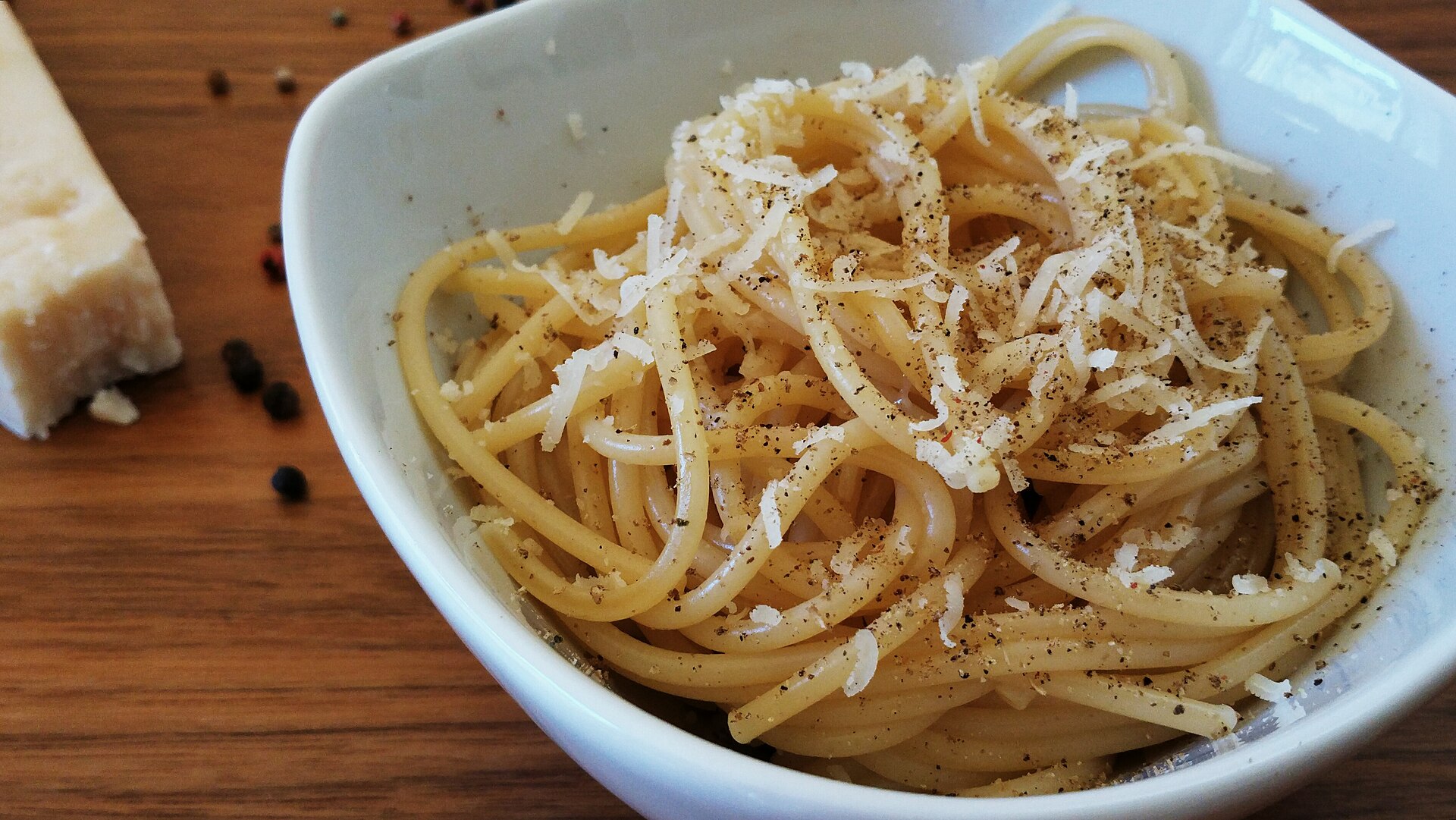
Cacio e pepe uses just three ingredients, which makes it a real test of technique.
Where to Eat in Rome, Neighborhood by Neighborhood
Campo de’ Fiori: Rome’s Oldest Market
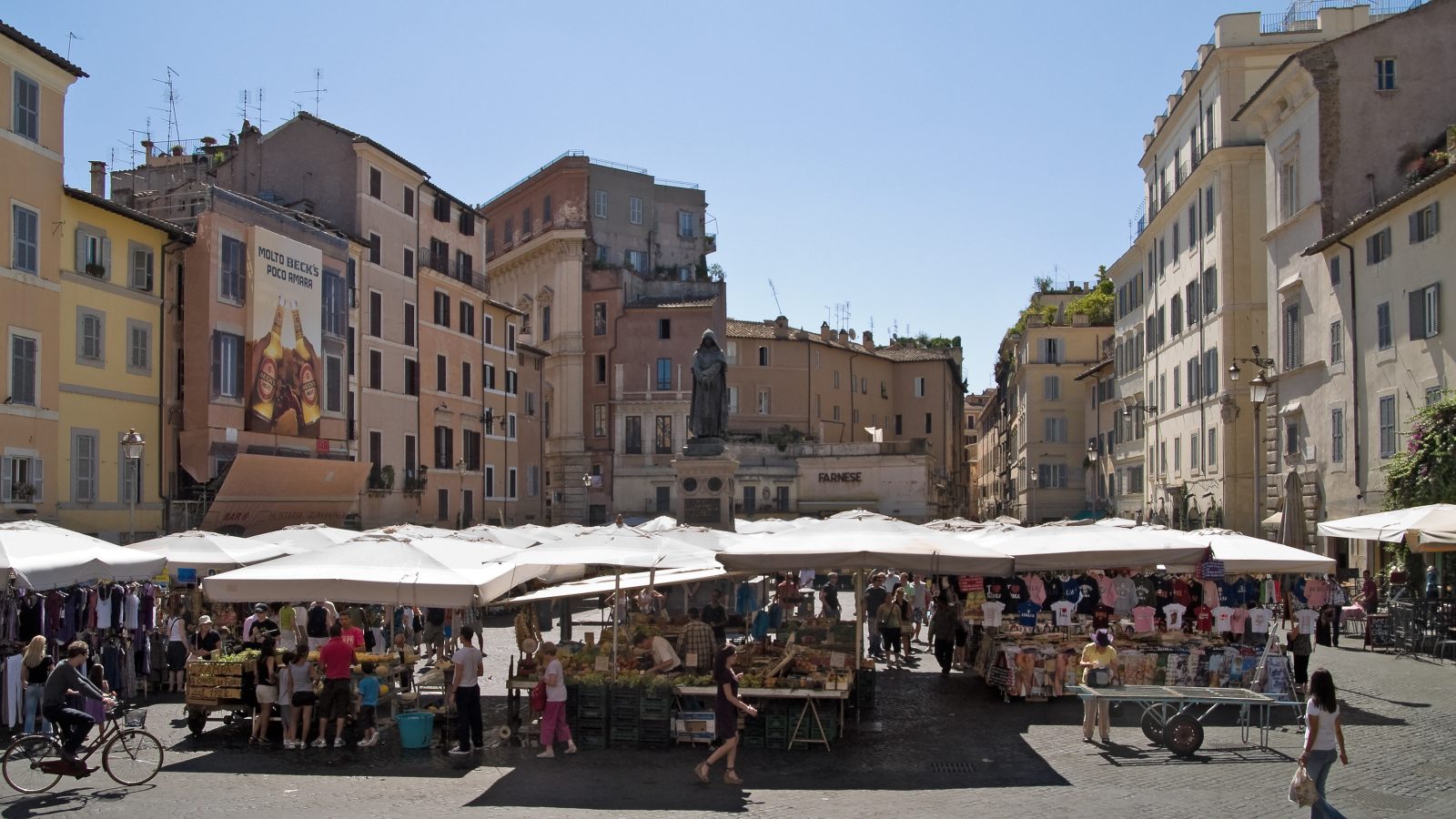
Campo de’ Fiori has hosted a daily produce market since 1869, after the market moved from Piazza Navona. Mornings here are the best time to see the square working as intended, before the surrounding restaurants shift into tourist-focused evening service. The market itself is worth a slow walk for fresh produce, dried porcini, and Roman spice blends, even for travelers not cooking their own meals.
Trastevere: Trattorias After Dark
Across the river, Trastevere’s tangle of cobblestone lanes fills with trattorias, wine bars, and gelaterias once the sun goes down. It is the most reliably atmospheric neighborhood for a sit-down Roman dinner, though its popularity means reservations are worth making, especially on weekends. Look past the restaurants with multilingual menus posted outside; a shorter, Italian-only menu is usually a better sign.
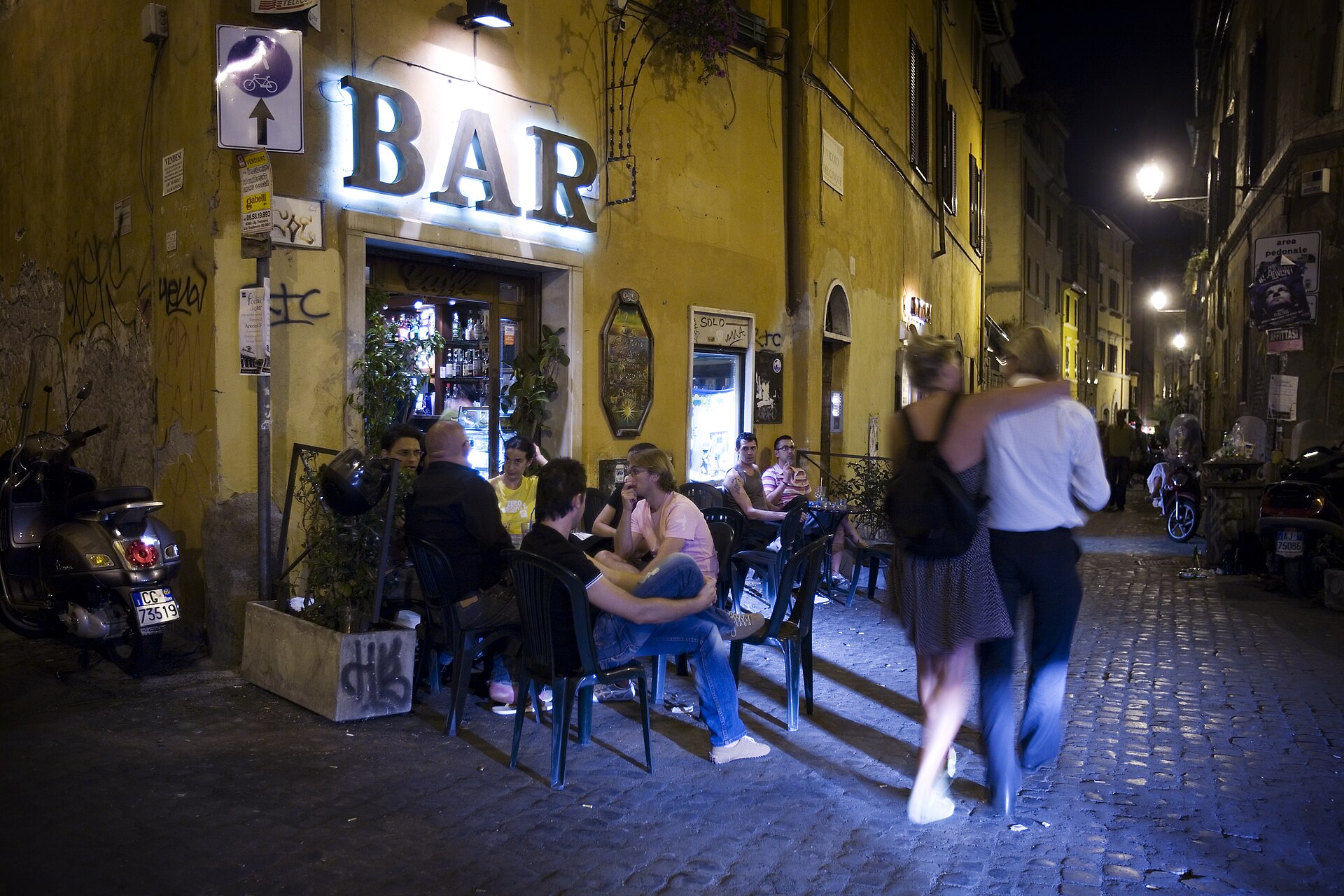
Trastevere’s narrow lanes are Rome’s most atmospheric setting for a late dinner.
Testaccio: Where Romans Actually Eat
Built around a former slaughterhouse district, Testaccio remains the neighborhood locals point to when asked where to eat in Rome without the tourist markup. The Testaccio covered market combines food stalls with a handful of standout counters, and the surrounding streets hold some of the city’s most respected trattorias for offal-based classics.
Prati and the Vatican Area: A Quieter Alternative
Just north of the Vatican, Prati offers a calmer dining scene with fewer tourist-trap warning signs than the streets immediately surrounding St. Peter’s Square. It’s a practical base for travelers splitting time between Vatican sightseeing and a broader Roman food itinerary.
Monti: Vintage Streets, Modern Kitchens
Tucked behind the Colosseum, Monti has become one of Rome’s most talked-about neighborhoods for a younger, more contemporary dining scene without losing its Roman core. Wine bars serving natural wines alongside classic cicchetti-style small plates sit next to decades-old family trattorias, making it one of the better neighborhoods for travelers who want variety within walking distance of ancient Rome’s major sights.
A Note on Roman Wine
Rome sits within easy reach of two distinct wine regions that rarely get the attention they deserve. Frascati, in the Castelli Romani hills southeast of the city, produces crisp, food-friendly whites that pair naturally with the region’s oilier pasta dishes. Most Roman wine lists lean heavily on Frascati and other Lazio wines by the glass, and asking a server for a vino della casa, or house wine, is a reliable way to get a well-matched, inexpensive pour rather than a bottle aimed at tourists.
What to Order Beyond Pasta
- Supplì: Fried rice balls filled with mozzarella, Rome’s answer to the Sicilian arancino.
- Carciofi alla romana: Braised artichokes, a seasonal spring specialty.
- Pizza al taglio: Rectangular, thick-crust pizza sold by weight, ideal for a quick lunch between sights.
- Maritozzo: A cream-filled sweet bun that has become one of Rome’s most photographed pastries.
Gelato Worth Seeking Out
Not all gelato in Rome is made the same way, and spotting the difference is easier than it sounds. Artisanal shops typically keep their gelato in covered metal tins rather than mounded high in bright, glossy piles under glass; the towering, neon-colored displays are usually a sign of additives and lower-quality ingredients rather than a house-made batch. Pistachio and stracciatella remain the two flavors locals use to judge a new gelateria.
Practical Tips for Eating Well in Rome
- Coperto, a small per-person cover charge, is standard at sit-down restaurants and is not the same as a tip.
- Restaurants near major landmarks with picture-menus outside are almost always priced for volume, not quality.
- Lunch (pranzo) typically runs from 12:30 to 2:30 p.m., and many kitchens close entirely between lunch and dinner service.
- Cappuccino is considered a morning drink; ordering one after a meal is a minor but noticeable faux pas.
Conclusion
Working out where to eat in Rome ultimately comes down to trusting the simplest option in the room. The city’s best meals rarely involve elaborate technique or long menus, just good ingredients handled with the kind of confidence that comes from making the same four pasta dishes for decades. Pairing a Campo de’ Fiori morning with a Trastevere dinner covers both ends of Rome’s food culture in a single day. Travelers building a broader Italian food itinerary may also want to compare notes with Naples and Palermo, two cities with very different culinary identities just a few hours south. And for travelers whose Roman trip was inspired by a film or show shot in the city, our look at the set-jetting travel trend covers how location-driven trips are reshaping bookings.
For seasonal openings and chef profiles, Condé Nast Traveler and Skift both cover Rome’s restaurant scene regularly.
Related Articles
Where to Eat in Naples: Pizza, Markets, and Street Food
Where to eat in Naples, from the wallet pizza sold on Spaccanapoli to the…
Where to Eat in Marrakech: Souks, Stalls, and Tagine
Where to eat in Marrakech, from Jemaa el-Fna's after-dark food stalls to the spice…
Where to Eat in Palermo: Markets, Fried Food, and Cannoli
A market-by-market guide to where to eat in Palermo, from the chaos of Ballarò…