Where to Eat in Marrakech: Souks, Stalls, and Tagine

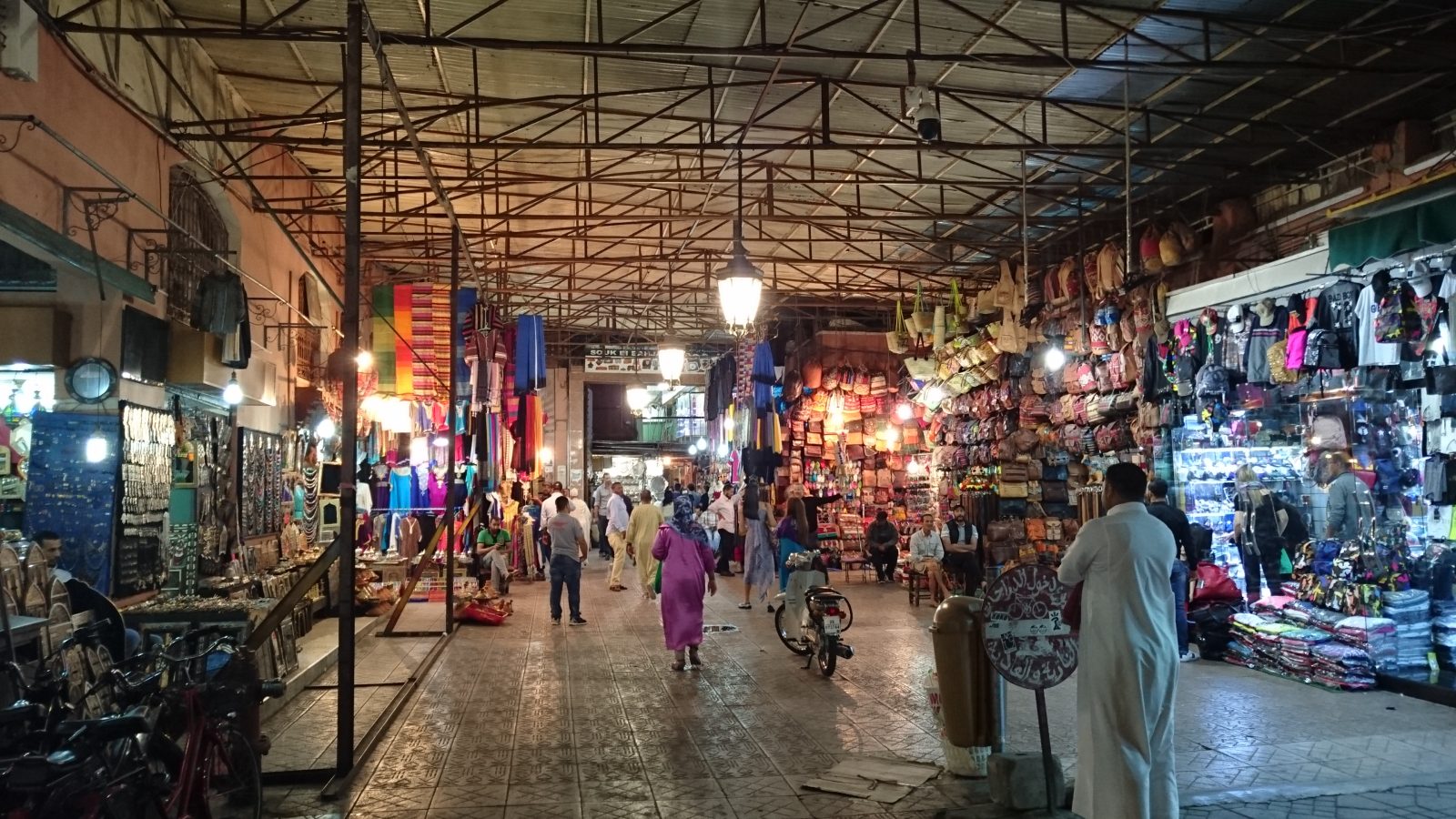
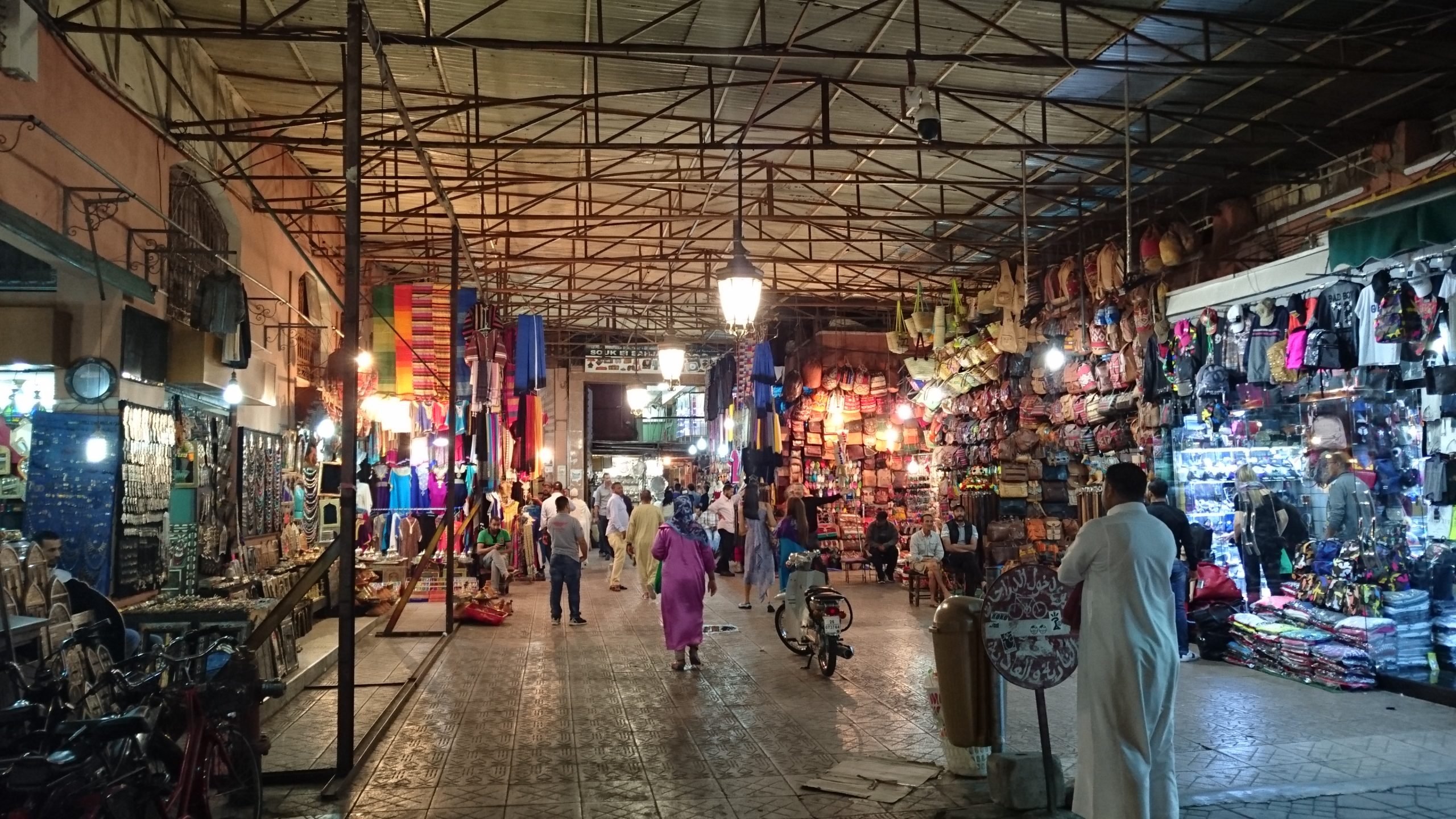
Where to eat in Marrakech usually comes down to one choice: follow the smoke and noise into Jemaa el-Fna at dusk, or duck into a quiet family-run spot tucked deep in the souks. Both are worth doing on the same trip. Moroccan food in Marrakech draws on Berber, Arab, and Andalusian traditions, and the city’s medina still cooks the way it has for generations — slow-simmered tagines, hand-ground spice blends, and pastries sold from the same stalls for decades.
This guide covers the dishes worth seeking out, where to find them, and how to eat well in Marrakech without wasting a meal on a tourist trap.
Start With the Dishes That Define Marrakech
A handful of dishes show up on nearly every Marrakech menu, and each is worth trying at least once from a stall or restaurant that specializes in it rather than one that offers everything at once.
Tagine, the dish that gives Marrakech its smell
Tagine takes its name from the cone-shaped clay pot it’s cooked in. The lid traps rising steam and recirculates moisture back over the meat and vegetables below, so the dish braises in its own juices with little added liquid. Classic versions include chicken with preserved lemon and olives, or lamb with prunes and almonds. Nearly every restaurant in the medina serves a version, but the best ones are cooked slowly over charcoal rather than on a gas burner.
Beyond tagine: harira, pastilla, and mechoui
Harira, a tomato-based soup thickened with lentils and chickpeas, is a common starter, especially in the cooler months. Pastilla layers shredded pigeon or chicken with almonds, cinnamon, and sugar inside flaky pastry. For something heartier, mechoui is a whole lamb slow-roasted for hours until the meat falls off the bone — Mechoui Alley near Jemaa el-Fna specializes in exactly this.
Where to Eat in Marrakech, Neighborhood by Neighborhood
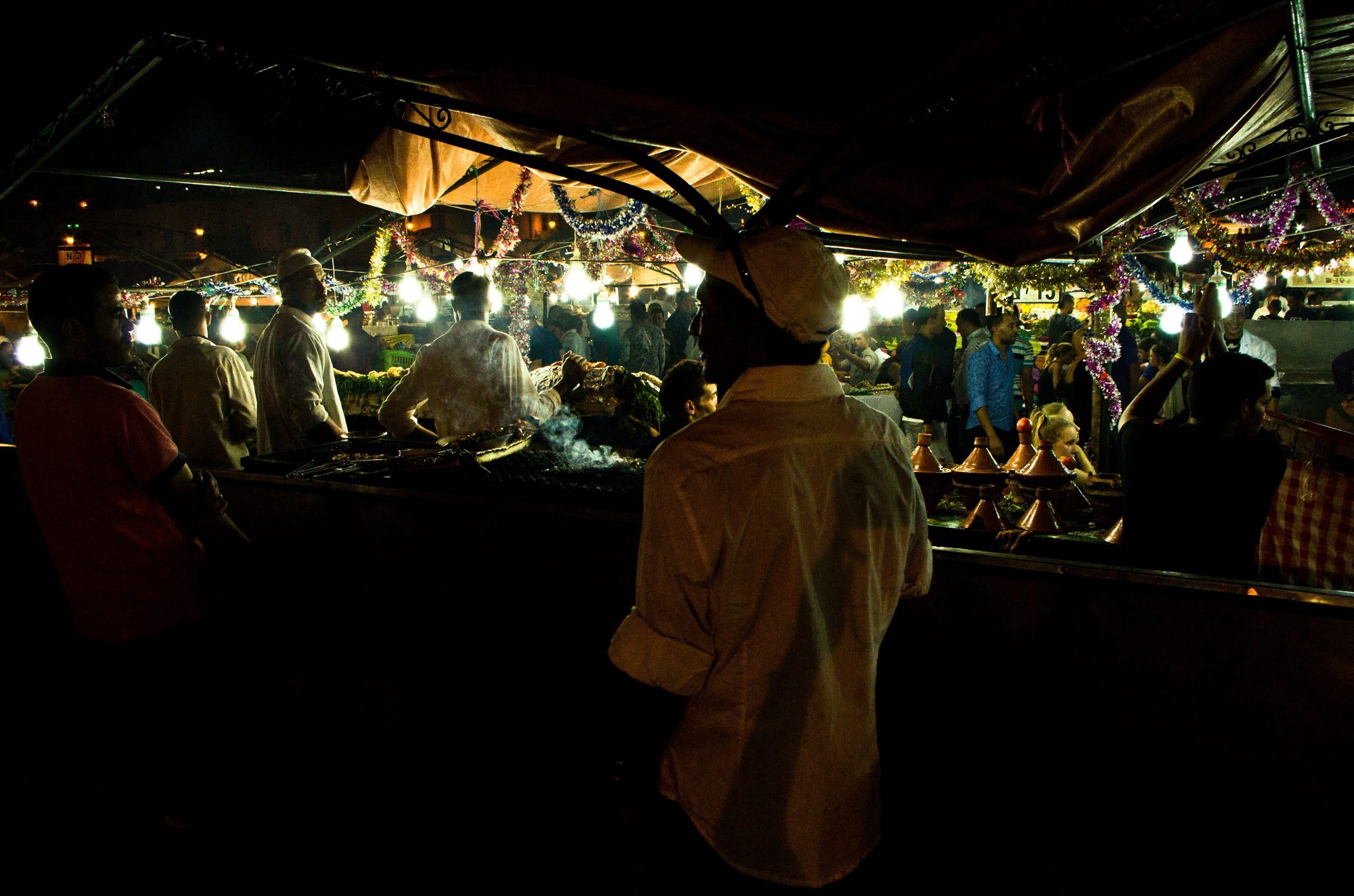
Jemaa el-Fna after dark
As the sun sets, Marrakech’s main square transforms into what’s often described as the world’s oldest open-air restaurant. Dozens of numbered stalls fire up grills for merguez sausage, grilled meats, snail soup, and fresh orange juice, while the smoke and crowd noise make the whole square feel like a single, sprawling kitchen. Prices are generally fair if you confirm what’s included before sitting down — bread, olives, and sauces are usually part of the price, but it’s worth asking. Go with an appetite rather than a plan, and let the smell guide you to a stall with a busy local crowd.
The Old Medina’s family-run kitchens
Away from the square, the medina’s quieter lanes hide small, family-run restaurants that serve a fixed menu of the day — usually a tagine or couscous, cooked at home-kitchen scale. These places rarely have signage worth noticing, so asking a rug seller or your riad host for a recommendation often works better than searching online.
The Souks: Where to Shop and Snack on Spices
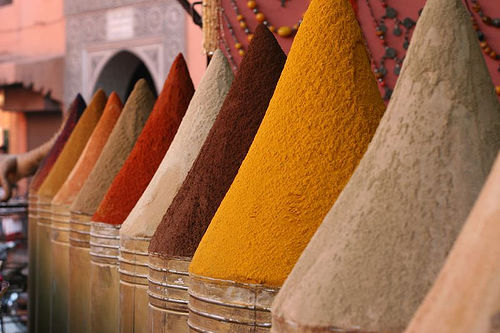
Rahba Kedima, the spice square
Rahba Kedima, sometimes called the Place des Épices, is Marrakech’s central spice market and one of the best places to understand the city’s food culture even without buying a single tagine. Pyramids of cumin, paprika, and turmeric spill from burlap sacks, and vendors will often let you smell or sample a blend of ras el hanout, a mix that can include more than two dozen spices depending on who’s making it.
What to bring home from the souks
- Ras el hanout: The all-purpose Moroccan spice blend, different at every stall.
- Argan oil and amlou: A nutty almond-argan paste, eaten with bread for breakfast.
- Preserved lemons: A staple in chicken tagine, sold jarred throughout the souks.
- Mint tea glasses: Often sold near the tea stalls where you can watch tea poured from a height to create foam.
Sweet Endings: Marrakech’s Pastries and Tea Culture
Moroccan mint tea, poured from height into small glasses, appears at the end of nearly every meal, and refusing a glass when offered is considered impolite. For dessert, look for chebakia, a sesame pastry coated in honey, and sellou, a nutty sweet often reserved for celebrations. Bakeries throughout the medina sell both by weight, making them an easy, portable way to sample Marrakech’s pastry tradition between meals.
Rooftop restaurants for a slower meal
If the energy of Jemaa el-Fna’s stalls feels like too much on a first night, several restaurants ring the square with rooftop seating that offers the same view with table service and a menu of Marrakech classics — a good way to ease into the city’s food scene before diving into the souks.
Practical Takeaways for Eating in Marrakech
- Eat where locals are eating — a packed stall with a short line of Marrakchis is a better sign than an empty one with an English menu and a tout at the door.
- Bring small denominations of dirhams for street stalls, since vendors often can’t break large bills.
- Fridays can mean shorter hours at family-run restaurants, since many close for prayer and a communal couscous lunch.
- If you’re sensitive to spice or unfamiliar ingredients, ask before ordering — offal dishes like sheep’s head are common but not always obvious from a menu description.
- A guided food tour through the souks and Jemaa el-Fna is worth considering on a first visit, since it shortcuts the trial and error of finding good stalls.
Conclusion
Where to eat in Marrakech is less about finding one perfect restaurant and more about moving through the city’s rhythms — Jemaa el-Fna at night, the spice souks by day, and a quiet family kitchen somewhere in between. Between tagine, pastilla, and a glass of mint tea poured tableside, Marrakech rewards travelers who eat the way the city does: slowly, communally, and mostly with their hands.
Pair this guide with our Marrakech travel guide and our guide to riad hotels in Marrakech for where to stay near the souks. For official visitor resources, see visitmorocco.com.
Related Articles
Where to Eat in Rome: Trattorias, Markets, and Roman Classics
A neighborhood guide to where to eat in Rome, from the Campo de' Fiori…
Where to Eat in Naples: Pizza, Markets, and Street Food
Where to eat in Naples, from the wallet pizza sold on Spaccanapoli to the…

Where to Eat in Palermo: Markets, Fried Food, and Cannoli
A market-by-market guide to where to eat in Palermo, from the chaos of Ballarò…