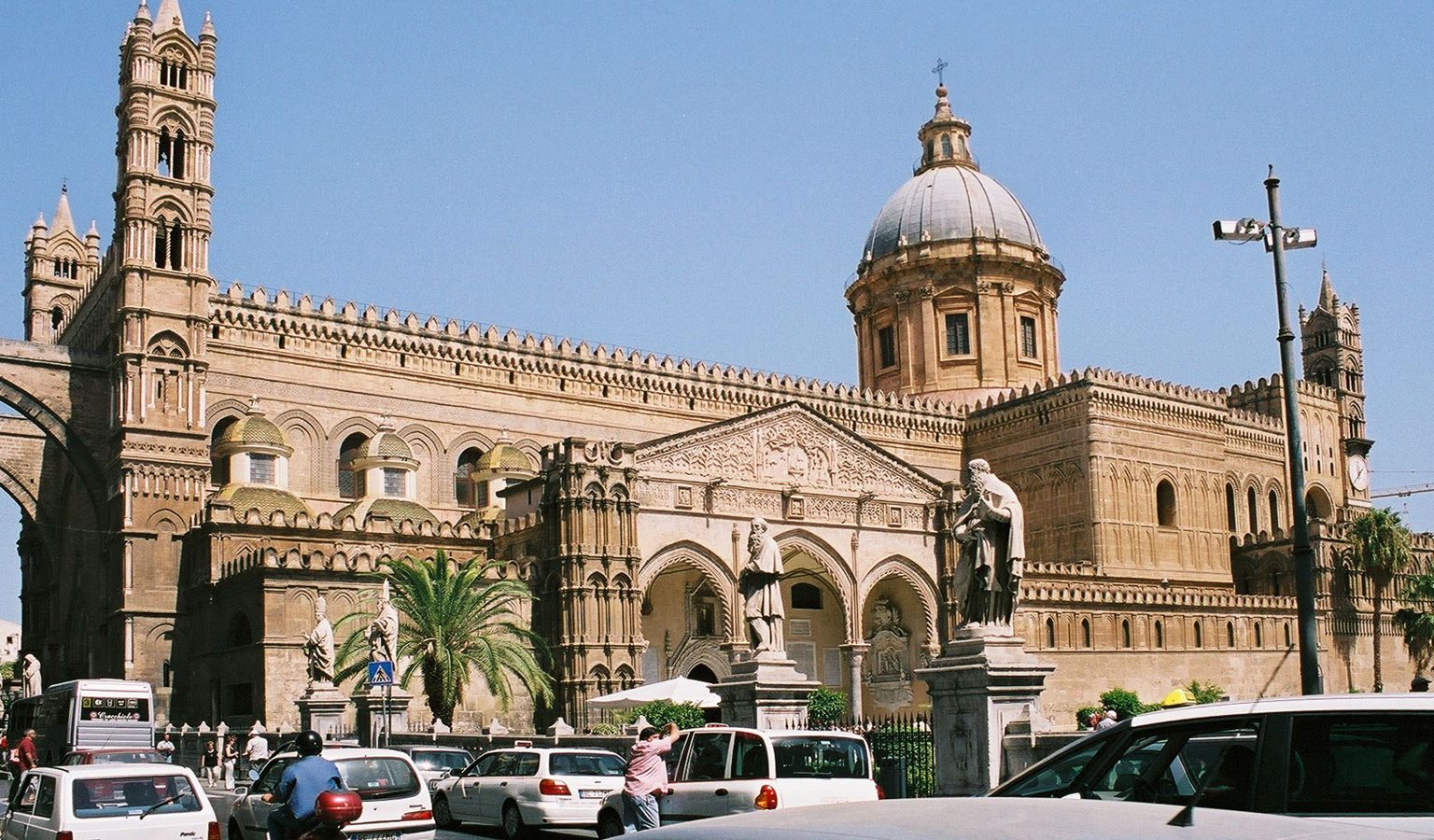
Where to Eat in Palermo: Markets, Fried Food, and Cannoli

Palermo has ranked among the top global cities for street food in past surveys, and the tradition here isn’t a tourist add-on. It grew out of necessity, feeding a working city cheaply and quickly, and that history still shapes what’s on offer: fried dough, offal, citrus, and seafood, almost all of it eaten standing up.
Ballarò: The Oldest and Loudest Market
Ballarò, in the Albergheria neighborhood near Piazza Carmine, is Palermo’s oldest market and its most chaotic. Vendors chant prices in a centuries-old call-and-response style known as abbanniata, a tradition with roots in Arab souk culture, and the noise alone is worth the visit. Arrive before noon on a weekday for the market at full energy; it winds down by early evening.
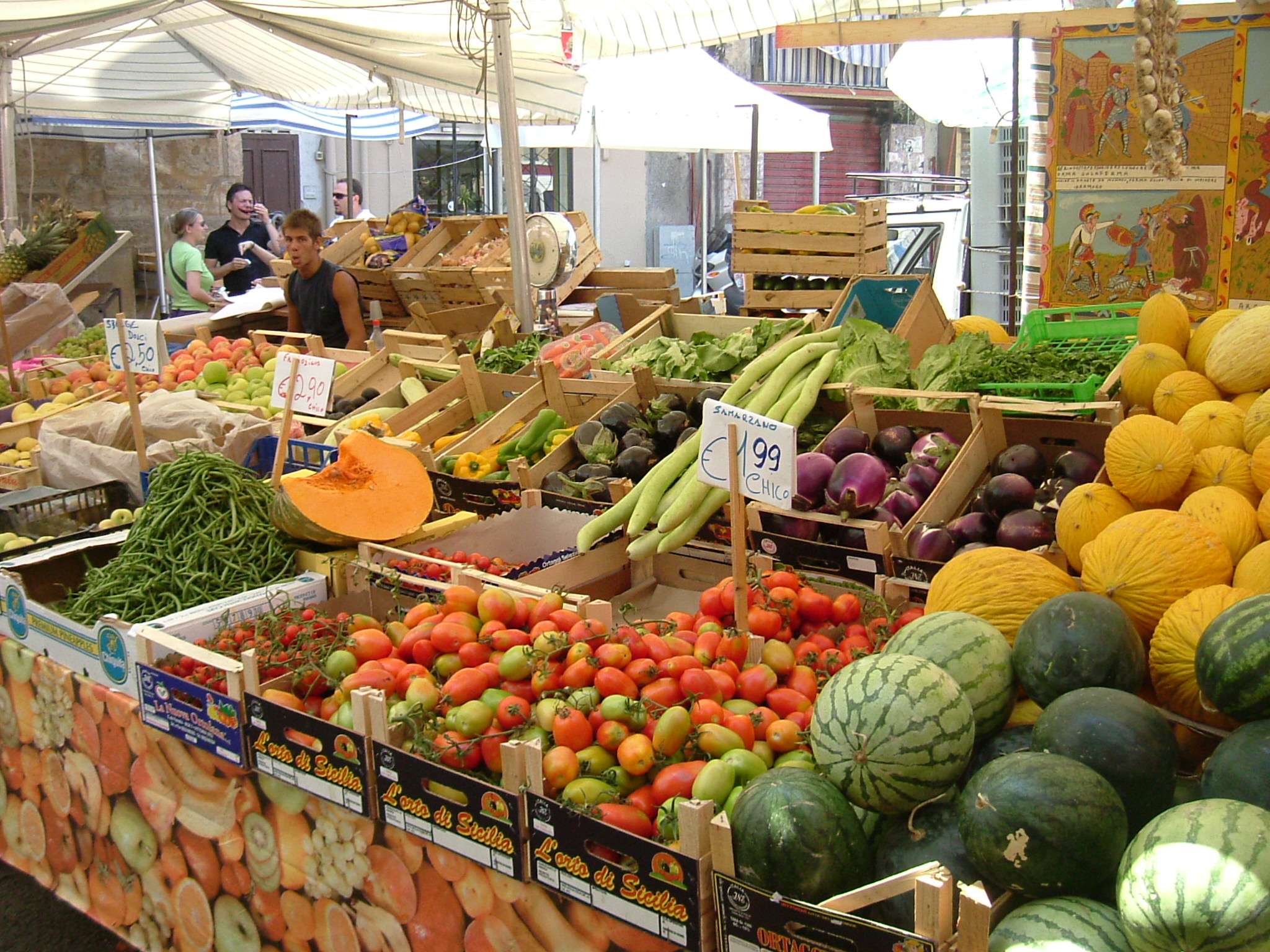
What to Eat at Ballarò
- Sfincione: a thick, spongy Sicilian flatbread topped with tomato, onion, and anchovies
- Panelle e crocchè: chickpea fritters and potato croquettes, usually stuffed into a sesame roll
- Pane ca meusa: the city’s famous spleen sandwich, a Palermo rite of passage
- Stigghiola: lamb or calf intestines grilled over charcoal, typically sold starting in the late afternoon
As Ballarò’s stalls pack up in the evening, the neighborhood shifts into a different gear. Plastic tables spill out around Piazza del Carmine and the area becomes a low-key, budget-friendly hangout for locals rather than a polished bar scene.
Il Capo: A Quieter, Focused Alternative
Entered through the historic Porta Carini gate, Il Capo runs through a narrower, more maze-like stretch of streets than Ballarò. It has a similar North African souk feel, but the crowd is calmer and the focus leans more toward fried food than raw produce. This is the spot for a proper panelle e crocchè sandwich, and mornings here are less overwhelming than a first visit to Ballarò.
Best Time to Visit Il Capo
Late morning through early afternoon is the sweet spot, when the fryers are running at full tilt and the market is busy without being packed. It’s a good second stop after a morning at Ballarò, since the pace and scale are noticeably gentler.
Vucciria: Street Food After Dark
Vucciria’s daytime market has faded compared to Ballarò and Capo, but it comes alive after sunset, especially Thursday and Friday, when plastic tables, cheap wine, and open-air grills take over the piazza. This is less about seeking out the very best food in Palermo and more about the scene: students, locals, and travelers mixing under string lights, with plates arriving fast and prices staying low.
What Vucciria Does Well
- Grilled skewers and fried seafood from open-air stalls
- Pane ca meusa, though Ballarò and Capo versions are generally considered better
- Cheap local wine served by the glass or the bottle
Beyond the Markets: Arancini and Cannoli
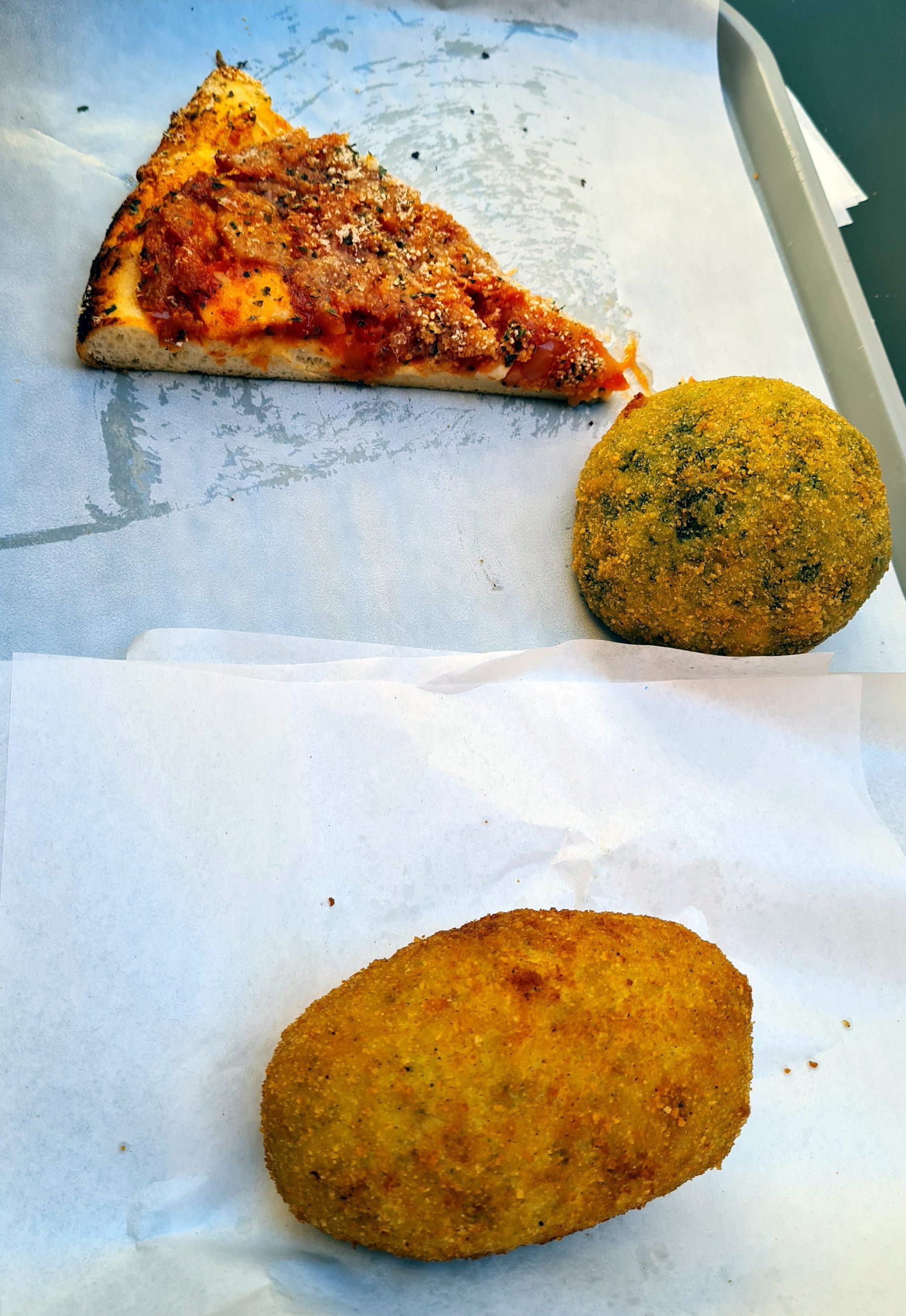
No guide to where to eat in Palermo is complete without arancini, the fried, stuffed rice balls that define Sicilian street food far beyond the island. In Palermo, arancini are traditionally round rather than the cone shape found further east near Catania, and the most common filling is a meat ragù with peas, though spinach, pistachio, and eggplant versions are widely available for vegetarians.
Save room for dessert. Cannoli, the crisp fried pastry tubes filled with sweetened ricotta, are a Palermo specialty best bought fresh and filled to order rather than pre-stuffed, which keeps the shell from going soggy. Look for bakeries near the historic center that fill cannoli only when you ask, a sign of quality over convenience.
Practical Takeaway
- Bring small bills and coins; most market stalls are cash-only.
- Most street food items cost between one and five euros, so you can eat very well for under fifteen euros a person.
- Ballarò and Capo are busiest and most rewarding before noon; Vucciria is a nighttime destination.
- Vegetarians can eat well on panelle, crocchè, and vegetable arancini, but should ask before ordering to avoid meat-based ragù fillings.
Conclusion
The honest answer to where to eat in Palermo is: follow the crowds, the smoke, and the shouting. Ballarò, Capo, and Vucciria each offer a different slice of the city’s food culture, from morning fry stalls to late-night grills, and none of it requires a reservation. Pair a market crawl with a fresh-filled cannolo and you’ll have covered the essentials of Sicilian street food in a single, satisfying day. If historic architecture appeals to you as much as food does, our guide to monastery hotels in Europe covers another way to travel through the region’s history.
]]>Related Articles
Where to Eat in Rome: Trattorias, Markets, and Roman Classics
A neighborhood guide to where to eat in Rome, from the Campo de' Fiori…
Where to Eat in Naples: Pizza, Markets, and Street Food
Where to eat in Naples, from the wallet pizza sold on Spaccanapoli to the…
Where to Eat in Marrakech: Souks, Stalls, and Tagine
Where to eat in Marrakech, from Jemaa el-Fna's after-dark food stalls to the spice…